
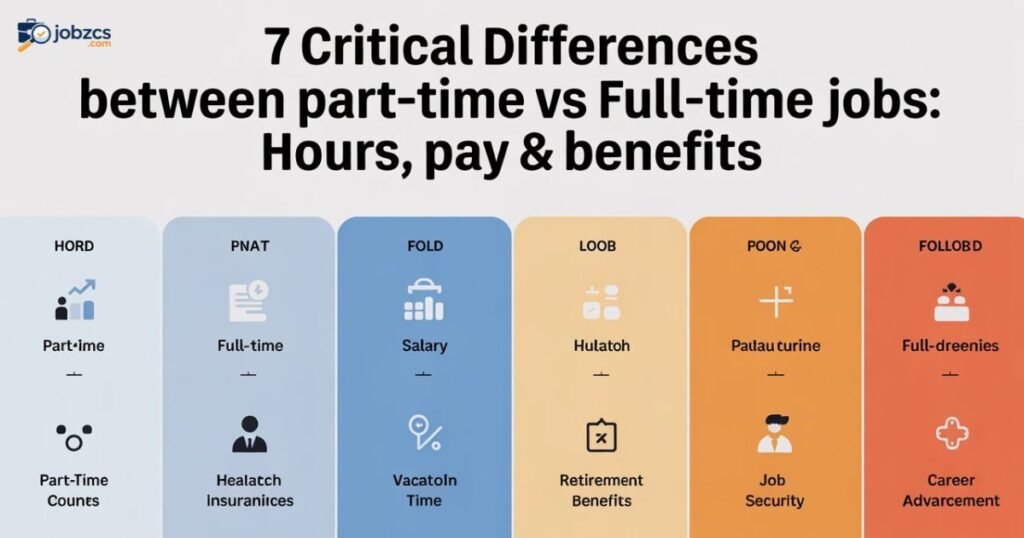
Summary: Choosing between part-time and full-time work can shape your income, lifestyle, and long-term career path. In today’s job market, understanding part-time employment and full-time roles helps you decide what fits your needs best. While some workers prefer flexible work hours and reduced working hours, others look for stable paid work and consistent benefits. The difference between full-time vs part-time work goes beyond hours and pay. It affects work-life balance, stress levels, and future opportunities. Whether you are a student, a parent, or a career-focused professional, knowing how these job types work allows you to make informed decisions that support both your personal life and professional goals.
Understanding the 7 Critical Differences Between Part-Time vs Full-Time Jobs: Hours, Pay & Benefits helps you make better career decisions in the United States. Many people feel unsure when choosing between flexibility and stability. This guide explains full-time vs part-time work in simple English, with real-life context, practical facts, and clear explanations that match how people actually work today.
Table of Contents
What Defines a Part-Time Job in the United States
The question What is a part-time job comes up often because the U.S. does not use one strict legal definition. In most workplaces, part-time employment means working fewer than 35 hours a week under a contract of service. Employers decide these limits based on business needs, staffing levels, and budget planning.
This type of employment type usually comes with reduced working hours, which makes it suitable for students and parents. Many people choose this path for paid work with flexible hours, especially in service industry jobs and office support roles. Although the Ministry of Manpower is not a U.S. agency, global employers often follow similar hour-based standards.
What Qualifies as Full-Time Employment in the U.S.
Full-time work in the U.S. usually means about 40 hours per week. Employers rely on full-time staff for stable paid work, predictable output, and long-term planning. A fixed work schedule helps teams coordinate tasks and meet deadlines.
Unlike part-time roles, full-time positions often include benefits like health insurance and paid leave. This difference explains why full-time vs part-time work affects both income security and long-term financial planning in a big way.
1 – Weekly Work Hours Explained
The biggest difference starts with time. Part-time roles focus on working fewer than 35 hours a week, while full-time jobs stay closer to 40 hours. That gap shapes daily energy levels and how much personal time you have.
Shorter hours often allow a flexible schedule that adjusts to school or family needs. Full-time jobs follow a more structured pattern, which supports consistency and team reliability.
2 – Pay Structure and Income Consistency
Pay works differently across job types. Most part-time roles rely on an hourly wage, which changes based on hours worked. Full-time employees often earn a salary that stays the same each pay period.
With hourly employment, income may rise or fall weekly. Salaried roles offer steadier income, though longer hours may not increase pay. According to Indeed Salaries, income often depends on industry and location.
3 – Employee Benefits and Eligibility
Benefits draw a clear line between roles. Full-time workers usually qualify for health insurance, paid time off, and retirement plans. Part-time workers may receive limited benefits or none at all.
Some employers now offer partial benefits to part-time staff. Still, full-time roles remain the main path to long-term benefit security.
4 – Work-Life Balance and Flexibility
Flexibility is where part-time work shines. A flexible work schedule supports school, caregiving, or side projects. Many workers report lower stress levels and more free time with shorter hours.
Full-time jobs demand deeper commitment. They offer growth but reduce time for personal priorities. Choosing the right balance protects your work-life balance and well-being.
5 – Job Security and Career Growth
Full-time roles usually offer better job security. Employers invest more in training, promotions, and leadership paths for permanent staff.
Part-time jobs still create opportunities, especially in entry-level jobs. Many careers begin with temporary employment or casual employment before moving into full-time roles.
6 – Taxes, Overtime, and Legal Protections
Labor laws protect both job types. Overtime rules often apply once workers pass certain weekly hour limits. Employers must classify workers correctly to avoid penalties.
Part-time workers still receive wage protections. Accurate classification ensures fairness and legal compliance.
7 – Who Should Choose Part-Time vs Full-Time Work
Part-time work suits student employment, caregivers, and those seeking flexibility. It allows balancing work and personal life while earning income.
Full-time work fits people focused on long-term growth and benefits. Career-driven workers often choose stability over flexibility.
Part-Time vs Full-Time Jobs Comparison Table
| Aspect | Part-Time Jobs | Full-Time Jobs |
|---|---|---|
| Working Hours | Usually fewer than 35 hours per week | Usually around 40 hours per week |
| Pay Structure | Often paid an hourly wage | Usually paid a fixed salary |
| Benefits | Limited or no benefits in many roles | Health insurance, paid leave, retirement plans |
| Flexibility | High workplace flexibility and adjustable schedules | Moderate flexibility with fixed schedules |
| Income Stability | Income may change week to week | Income stays consistent each pay period |
Common Myths About Part-Time and Full-Time Jobs
Many people believe part-time jobs have no future. In reality, they build skills and experience. Others think full-time always pays more, yet some hourly roles outperform salaried positions depending on demand and location.
Understanding these myths helps you choose based on facts, not assumptions.
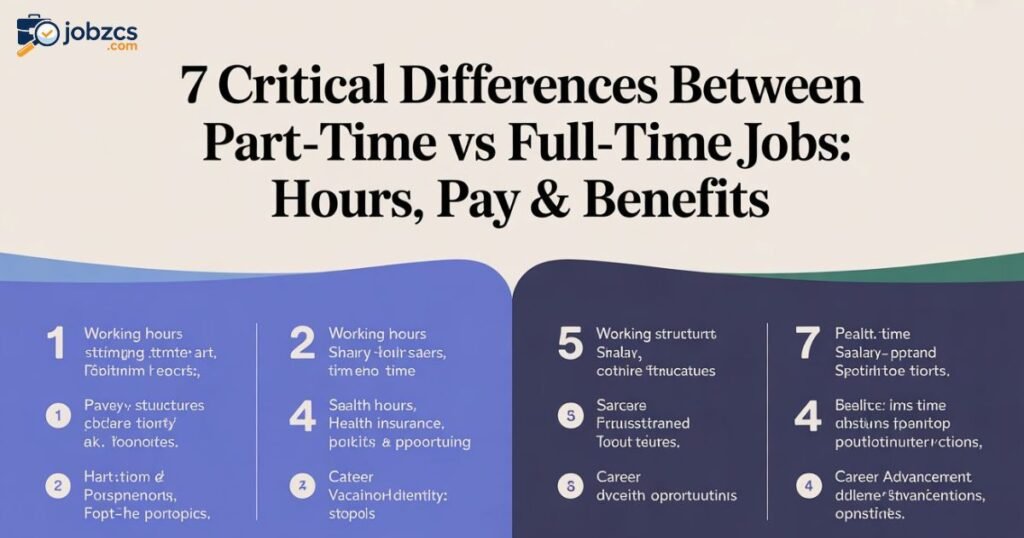
How Employers Classify Workers in the U.S.
Employers classify workers based on hours, duties, and pay structure. Clear policies protect workers and businesses alike. Proper classification avoids legal trouble and builds trust.
Conclusion
Choosing between part-time and full-time work depends on what you need most right now. Part-time employment offers flexible work hours, reduced working hours, and a healthier work-life balance, which suits students, parents, and anyone needing freedom. Full-time roles provide stable paid work, consistent income, and long-term benefits. When you understand full-time vs part-time work, you can match your career choice with your lifestyle, financial goals, and future plans with clarity and confidence.
FAQs.
What does it mean to have a part-time job?
Having a part-time job means working fewer than 35 hours per week, usually with a lighter workload and flexible work hours compared to full-time roles.
What is the IRS definition of a part-time employee?
The IRS does not set a strict definition, but generally considers anyone working less than 30 hours per week as part-time for tax and benefit purposes.
How many hours is usually considered part-time?
Most employers consider 20 to 34 hours per week as part-time, depending on company policy and business needs.
How many hours a week do part-time get?
Part-time employees typically work 10 to 34 hours per week, often on a flexible schedule.
What are the minimum hours a week for part-time?
There is no federal minimum, but many part-time jobs start at 10 to 15 hours per week, especially in retail and service roles.