
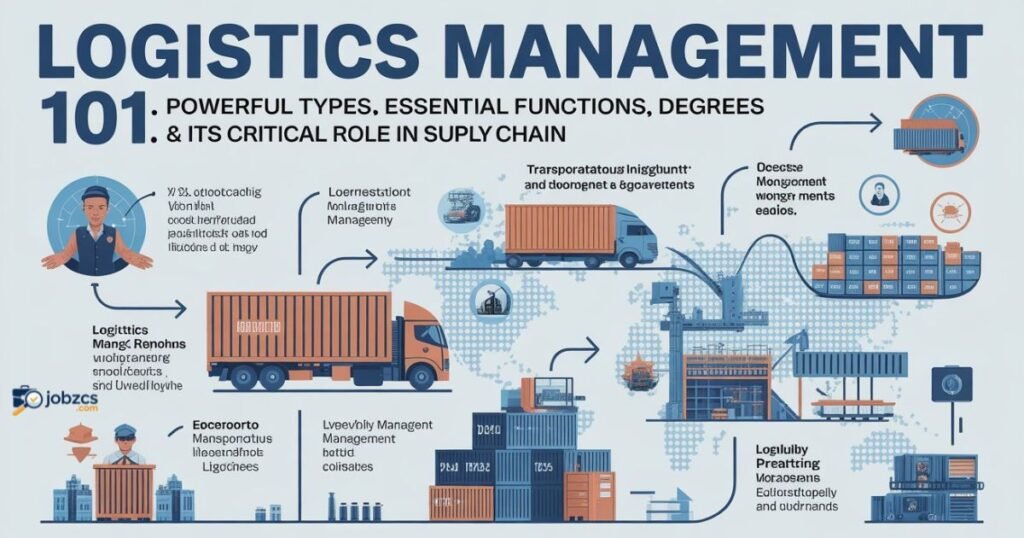
Summary: Logistics Management plays a vital role in how modern businesses move products efficiently and reliably across markets. It controls the logistics management process that connects suppliers, warehouses, and customers into a seamless logistics flow. By coordinating essential logistics activities, companies improve speed, accuracy, and overall service quality. Strong logistics planning ensures materials and finished goods travel through the full logistics lifecycle without delays or waste. In today’s competitive environment, effective logistics supports growth, reduces operational risks, and strengthens customer trust. When businesses manage logistics well, they gain better visibility, maintain cost control, and deliver consistent value that helps them stay ahead in fast-changing industries.
Logistics Management plays a decisive role in how businesses in the United States move products efficiently and reliably. It governs the flow of goods and materials from the point of origin to point of consumption, making sure every shipment reaches the right place at the right time. When done correctly, Logistics Management supports growth, protects profit margins, and strengthens customer trust across industries.
Table of Contents
What Is Logistics Management? A Clear Definition for Modern Businesses
Logistics Management refers to the structured control of the logistics management process that oversees planning, execution, and monitoring of product movement. It connects logistics activities such as order processing, material handling, storage, and goods transportation into one smooth system. This coordinated logistics flow supports both business logistics and large-scale industrial logistics operations.
In practical terms, Logistics Management ensures raw materials, finished goods, and returns move efficiently through the logistics lifecycle. For example, in U.S. retail and manufacturing, it balances speed, accuracy, and cost while maintaining consistent service. Strong logistics planning prevents delays and supports reliable market delivery.
The Critical Role of Logistics Management in Supply Chain Management
The role of Logistics Management within supply chain management is foundational. It drives supply chain coordination by linking suppliers, warehouses, transportation providers, and customers into one end-to-end supply chain. Without effective logistics operations, even the best supply chain strategy breaks down.
By managing inbound and outbound logistics, businesses gain supply chain visibility and improve supply chain efficiency. In a global supply chain network, logistics keeps information and products moving together. This alignment allows faster decisions, reduced disruptions, and stronger customer satisfaction across domestic and international markets.
Who Is a Logistics Manager? Roles, Responsibilities, and Daily Impact
A logistics manager oversees daily logistics operations and ensures every moving part works in harmony. This role involves close collaboration with a supply chain manager, warehouse supervisor, operations manager, and sometimes a logistician. The goal remains clear: deliver products efficiently without unnecessary cost.
On a typical day, a logistics manager monitors transportation scheduling, supervises order fulfilment, and resolves delivery issues. They focus on logistics cost control, delivery efficiency, and performance analysis. Their decisions directly affect profitability and the quality of damage-free product delivery.
Powerful Types of Logistics Management You Need to Know
Different types of Logistics Management address distinct stages of the supply chain. Inbound logistics handles materials entering a business, while production logistics ensures smooth movement during manufacturing. Outbound logistics then delivers finished goods to customers using reliable delivery networks.
Many U.S. companies rely on third-party logistics (3PL) providers to scale operations. Distribution logistics, customer service logistics, and reverse logistics manage retail distribution, after-sales support, and reverse logistics handling. Together, these models support efficient logistics operations across industries like e-commerce, construction, and manufacturing.
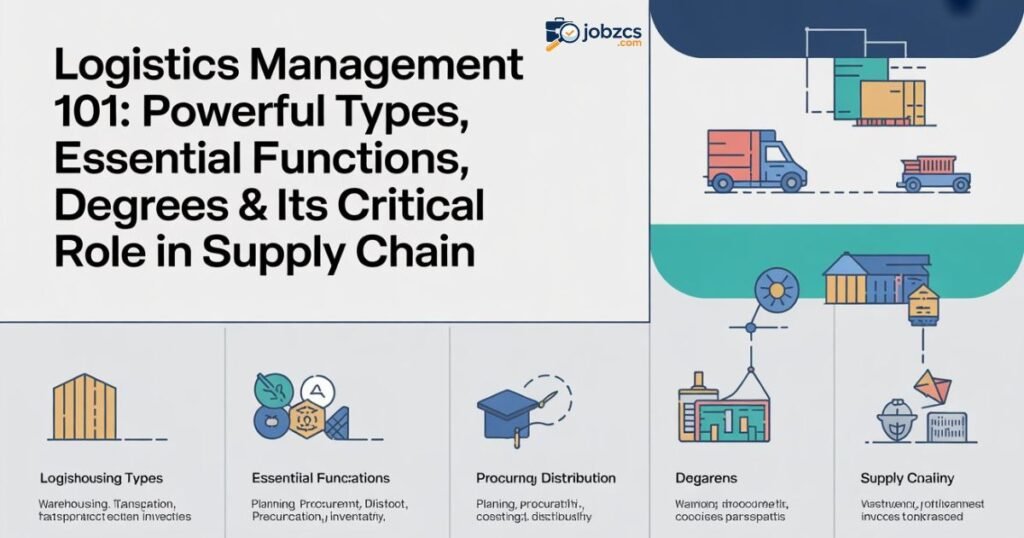
Essential Functions of Logistics Management Explained Simply
The essential functions of Logistics Management begin with warehouse operations, where goods are stored safely and organized through smart warehouse layout planning. Effective inventory control systems and inventory optimization reduce waste and support accurate stock level management across storage facilities.
Beyond storage, logistics functions include order processing, packaging for transport, and freight management. Transportation scheduling selects the best logistics transportation modes for speed and cost. Each function supports cost-effective logistics while ensuring customer demand fulfilment remains consistent.
The Logistics Management Process Step by Step
The logistics management process starts with demand forecasting and logistics planning strategy. Accurate demand forecasting allows companies to prepare inventory and avoid shortages. Procurement and sourcing then feed materials into the system at the right time.
Next comes storage, distribution, and last-mile distribution, which is critical for customer experience. Inventory replenishment, returns, and reverse logistics close the loop. This structured approach ensures smooth logistics flow and long-term operational stability.
Logistics Management Degrees, Skills, and Certifications in the USA
Careers in Logistics Management often begin with a bachelor’s degree in logistics, supply chain management, or business. Many professionals advance through MBA programs focused on business logistics and analytics. These degrees build skills in planning, coordination, and data interpretation.
Certifications strengthen credibility and career growth. Popular U.S. options include CLTD, CSCP, CPL, and PMP. Employers value professionals who understand resource optimization, risk mitigation, and performance measurement using modern logistics tools.
Benefits and Importance of Logistics Management for US Businesses
Effective Logistics Management improves operational efficiency by reducing delays and unnecessary expenses. Businesses benefit from better inventory accuracy, lower transportation costs, and faster delivery cycles. These improvements directly impact customer satisfaction and brand reputation.
Strong logistics also enables scalability. Companies entering new markets rely on distribution logistics and global trade logistics expertise to expand safely. With proper logistics KPIs and analytics, leaders make informed decisions that support sustainable growth.
Technology and Software Transforming Logistics Management
Modern Logistics Management relies heavily on technology. Logistics management software, warehouse management systems, and transportation management systems centralize planning and execution. These platforms enable real-time tracking and provide actionable insights.
Advanced tools like logistics dashboards, real-time dashboards, Gantt charts, and Kanban boards improve visibility and coordination. Combined with logistics automation tools and data-driven logistics, technology helps companies respond faster and maintain competitive advantage.
Challenges, Best Practices, and the Future of Logistics Management
Despite its benefits, Logistics Management faces challenges such as rising fuel costs, labor shortages, and supply disruptions. Successful organizations apply contingency planning and risk mitigation strategies to stay resilient during uncertainty.
Looking ahead, automation, AI, and sustainability will reshape logistics operations. Companies that invest in workflow automation, route optimization, and green practices will lead the future. Strong Logistics Management will remain the backbone of supply chain success in the United States.
Conclusion
Logistics Management remains a critical driver of efficiency, reliability, and long-term business success. By mastering the logistics management process, organizations create a smooth logistics flow that keeps products moving without disruption. Well-planned logistics activities support faster delivery, lower costs, and stronger customer confidence. Through strategic logistics planning, businesses gain control over the entire logistics lifecycle, from sourcing to final delivery. As markets grow more competitive and customer expectations rise, companies that invest in effective logistics practices position themselves for sustainable growth, operational stability, and a lasting advantage within modern supply chains.
FAQs.
What is logistics management?
Logistics management is the planning and control of how goods move, are stored, and delivered from suppliers to customers in a cost-effective and timely way.
What are the 4 types of logistics management?
The four main types are inbound logistics, production logistics, outbound logistics, and reverse logistics, each handling a different stage of product movement.
What are the 7 functions of logistics?
The seven functions include order processing, inventory management, warehousing, material handling, packaging, transportation, and information management.
What does a logistics manager do?
A logistics manager plans and oversees transportation, storage, and delivery to ensure products reach customers on time and within budget.
What is the highest salary in logistics?
In the United States, senior logistics or supply chain directors can earn over $150,000 per year, depending on experience and industry.