
Summary: Logistics services explained means understanding how goods move from one place to another, and how businesses keep this process smooth and efficient. In today’s fast-paced market, logistics services help companies manage supply chain management, handle warehousing and storage, and ensure timely delivery to customers. When a business uses third-party logistics (3PL) or freight forwarding services, it gains access to specialized skills and advanced technology. This makes shipping faster, safer, and cheaper. From managing order fulfilment services to tracking shipments in real time, logistics services are the backbone of modern trade and eCommerce, helping companies grow and stay competitive.
In 2026, logistics services rely heavily on technology, automation, and sustainability. Supply chain management now uses real-time data and smart software to predict demand and reduce waste. Businesses that ignore logistics technology risk delays, higher costs, and unhappy customers.
Table of Contents
What Are Logistics Services and How Do They Work in 2026
What are logistics services is a question every business owner asks when they start shipping products. Logistics services include planning, storing, moving, and delivering goods. They cover inbound logistics for receiving materials, outbound logistics for shipping products, and distribution logistics for moving items to the right location. Every step needs strong coordination to avoid delays.
How logistics services work depends on systems like transportation management system (TMS) and warehouse management system (WMS). These systems track shipments, manage inventory, and optimize routes. When a business uses logistics outsourcing, it can rely on logistics service providers to handle these tasks. This reduces errors and improves delivery speed.
In 2026, logistics automation is growing fast. Warehouses use robots and sensors to pick and pack orders. Logistics operations become faster and safer. At the same time, sustainable logistics and green logistics are rising in importance. Customers now expect eco-friendly shipping, and companies respond with cleaner practices.
Types of Logistics Services: A Deep Guide for Modern Businesses
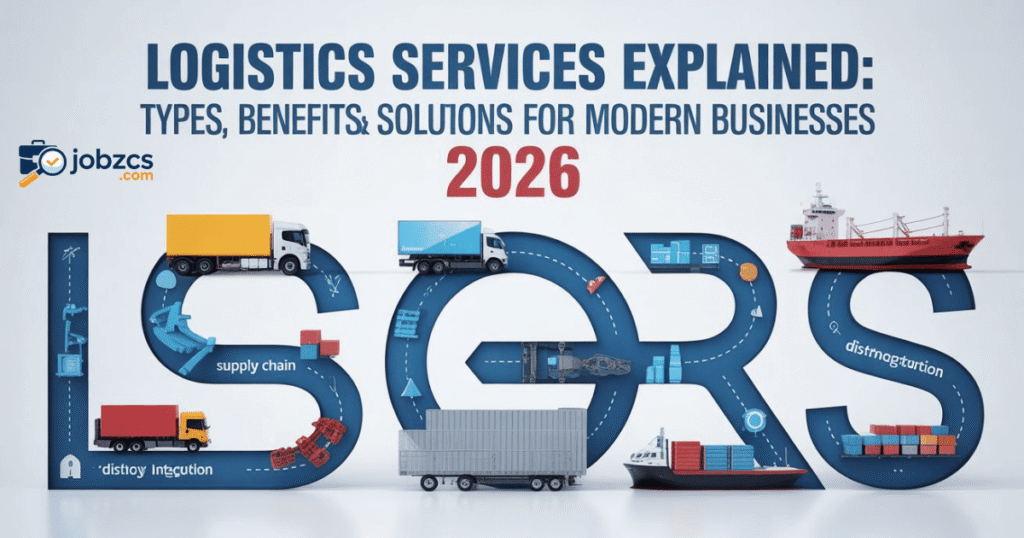
Types of logistics services include many options, and each fits different business needs. Transportation management covers shipping by road, air, rail, and sea. Freight forwarding services handle international routes and customs clearance. Cargo handling services protect goods during loading and unloading. Third-party logistics (3PL) providers manage these tasks for businesses that want faster growth without building their own logistics team.
Warehousing and storage includes real warehouses, cold storage, and cross-docking facilities. Inventory management systems keep stock levels accurate, prevent stockouts, and reduce waste. Order fulfilment services pick, pack, and ship orders quickly. Last mile delivery handles the final delivery to customers, and this step often costs the most. Reverse logistics manages returns, repairs, and recycling. This is especially important for eCommerce logistics, where returns are common and expensive.
How Logistics Services Improve Business Performance and Customer Satisfaction
Benefits of logistics services go beyond faster shipping. When logistics runs well, businesses reduce costs and improve customer trust. How logistics improves customer satisfaction is clear when orders arrive on time and in perfect condition. Modern logistics uses data to forecast demand, avoid stockouts, and prevent delays. A strong logistics plan supports both growth and reliability.
Why logistics is important for business lies in its ability to connect every part of the supply chain. How supply chain logistics works is a chain of linked actions, from procurement to delivery. Procurement logistics brings in raw materials, while manufacturing logistics supports production schedules. Inbound vs outbound logistics explained shows that inbound focuses on receiving goods, while outbound focuses on sending finished products to customers. When both are optimized, businesses gain stability and growth.
How to Choose the Best Logistics Service Provider in the USA
Choosing a logistics partner requires careful research. How to choose a logistics service provider starts with understanding your shipping volume, product type, and customer expectations. A small business may need logistics services for small businesses, while a fast-growing brand may require full logistics outsourcing. Companies should look for providers that offer logistics solutions for global shipping, especially if they sell internationally.
A good provider must offer strong technology and clear communication. Role of technology in logistics is vital for tracking shipments, managing inventory, and improving delivery speed. What is a transportation management system is essential because it optimizes routes, reduces fuel costs, and prevents delays. How warehouse management systems work is also crucial because it keeps inventory accurate and reduces picking errors. The right provider will combine logistics strategy, strong tools, and transparent pricing to support long-term growth.
Logistics Services Trends in 2026 and Future-Proof Solutions
Logistics is changing fast, and 2026 shows major shifts. Logistics trends in supply chain include automation, AI, and real-time tracking. Logistics technology now predicts demand and optimizes delivery routes. Transportation management system (TMS) uses data to reduce shipping costs and increase speed. Warehouse management system (WMS) keeps stock levels accurate, which prevents lost sales and overstock.
Another major trend is sustainability. Sustainable logistics and green logistics are now essential for brand reputation. Companies reduce packaging waste, switch to electric delivery vehicles, and optimize routes to cut emissions. Logistics automation also helps by reducing manual errors and speeding up operations. The future belongs to businesses that combine speed, accuracy, and eco-friendly practices.
Table: Common Logistics Services and Their Real Impact
| Logistics Service | Real Use Case | Key Result |
|---|---|---|
| Freight forwarding services | International shipping and customs | Faster global delivery |
| Warehousing and storage | Storage near major cities | Lower shipping cost and faster delivery |
| Order fulfilment services | Online orders packed and shipped | Fewer errors and faster shipping |
| Last mile delivery | Final delivery to customers | Better customer satisfaction |
| Reverse logistics | Returns and repairs | Reduced waste and higher recovery |
| Transportation management system (TMS) | Route optimization | Lower fuel cost |
| Warehouse management system (WMS) | Inventory tracking | Less stockout risk |
Real World Logistics Examples That Show the Power of Logistics Services
A US eCommerce company used logistics services for eCommerce companies to manage high demand. They adopted order fulfilment services and last mile delivery. This reduced delivery time from five days to two days. Customers gave better reviews, and sales grew. The company also improved reverse logistics to handle returns faster, lowering costs.
A manufacturing business used inbound logistics to receive raw materials on time and outbound logistics to ship finished goods. They used inventory management systems to prevent stockouts and avoid production delays. This improved productivity and reduced waste. The business grew without adding new staff or extra storage.
Conclusion
Logistics services explained shows how modern businesses keep goods moving efficiently, from the factory to the customer’s door. By using supply chain management, companies gain control over costs, speed, and inventory. Logistics service providers like third-party logistics (3PL) and freight forwarding services bring expertise that many businesses lack. They also improve order fulfilment services, helping customers receive products on time. In 2026, logistics will rely even more on technology, automation, and sustainable practices. When businesses invest in smart logistics, they reduce waste, improve customer satisfaction, and stay competitive in a fast-changing market.
FAQs:
What are the 4 types of logistics?
The four main types are inbound logistics, outbound logistics, reverse logistics, and distribution logistics, covering everything from receiving goods to delivering them and handling returns.
What are the different types of logistics services?
Different services include transportation management, warehousing and storage, order fulfilment, freight forwarding, last mile delivery, and reverse logistics for returns.
What are the top 5 logistics services providers?
The top global providers often include DHL, FedEx, UPS, Kuehne + Nagel, and DB Schenker, known for strong global networks and reliable shipping.
What are the 7 pillars of logistics?
The seven pillars are transportation, warehousing, inventory management, packaging, materials handling, information management, and customer service.
What are the 3 C’s of logistics?
The 3 C’s are Cost, Customer service, and Capacity, which guide logistics planning and performance.