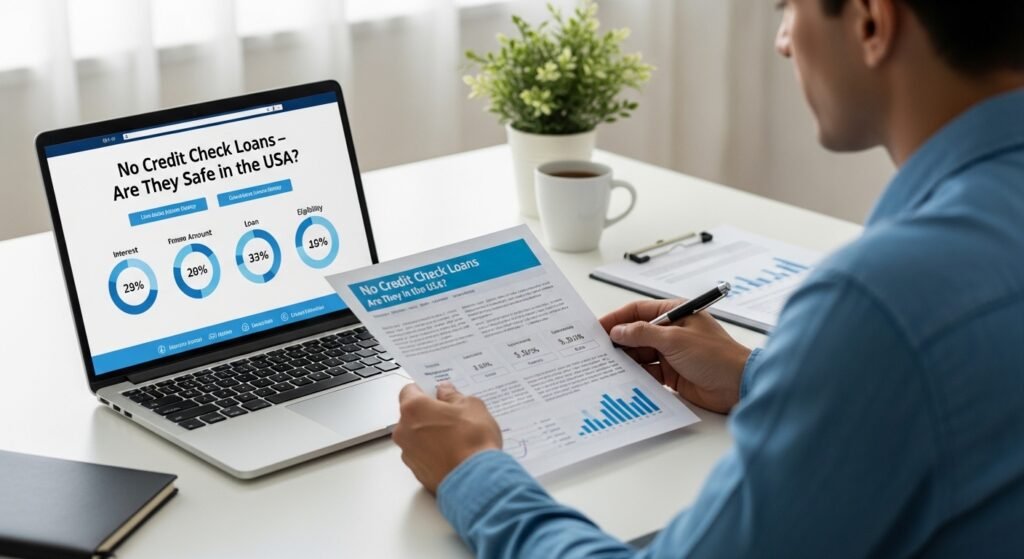

In the United States, many borrowers struggle to qualify for traditional loans due to low credit scores or limited credit history. This has led to the rise of no credit check loans, which claim to offer fast cash without assessing your credit report. But the important question is: Are no credit check loans safe in the USA?
In this complete guide, we’ll explain what no credit check loans are, how they work, the risks involved, how to identify scams, and safer alternatives you should consider before applying.
What Are No Credit Check Loans?
No credit check loans are financial products that lenders offer without reviewing your credit history or pulling a credit report from major credit bureaus like Equifax, Experian, or TransUnion.
Unlike traditional loans — which rely heavily on credit scores — these lenders base approval on other factors such as:
- Income stability
- Bank account history
- Employment status
For many borrowers with bad credit or no credit history, this sounds appealing. However, there are important safety considerations to understand before applying.
How Do No Credit Check Loans Work?
No credit check loans are usually short‑term loans, such as:
- Payday loans
- Title loans
- Installment loans
Here’s how most lenders process them:
- Application Submitted – You provide personal details, proof of income, and bank information.
- Soft Verification – Lender checks bank deposits and income but not your credit history.
- Loan Decision – Approval is often fast, sometimes in minutes.
- Funds Disbursed – Money is sent directly to your bank account.
The promise of quick approval and no credit check is attractive, but it often comes with high costs.
Are No Credit Check Loans Safe?
The short answer: It depends. Many no credit check loans can be risky.
Here are the main safety concerns:
1. Extremely High Interest Rates
Many no credit check lenders charge very high APRs (Annual Percentage Rates). Some can exceed 300% or more, especially for payday loans.
High interest means you may pay much more than you borrowed, often making it harder to repay.
2. Short Repayment Periods
Some lenders require repayment within just a few weeks or days — particularly payday lenders — which can cause financial strain.
3. Risk of Debt Traps
If you can’t repay on time, you may roll the loan over — paying additional fees and interest — trapping you in debt for longer.
4. Scams and Predatory Lenders
Some lenders operate illegally or use misleading terms:
- Hidden fees
- Unclear repayment expectations
- Aggressive collection tactics
These practices can put borrowers at risk.
Common Types of No Credit Check Loans
📌 1. Payday Loans
Short‑term, small‑amount loans due on your next payday.
High fees and ultra‑short repayment periods make them risky.
📌 2. Title Loans
Lenders use your car title as collateral.
If you fail to repay, you risk losing your vehicle.
📌 3. Installment Loans
Borrow a fixed amount and repay in scheduled payments.
These may be slightly safer but often still have high interest rates.
How to Identify Safe Lenders
If you decide to consider a no credit check loan, here’s how to spot safer options:
✔ Licensed and Registered
Make sure the lender is licensed in your state and complies with local lending laws.
✔ Clear Fee Structure
A legitimate lender will:
- Clearly disclose interest rates
- Show all fees upfront
- Provide repayment terms in writing
✔ No Upfront Fees
Avoid lenders who ask for fees before you receive the loan — often a red flag for scams.
✔ Good Customer Support
A safe lender provides easy ways to contact support and answers questions clearly.
Alternatives to No Credit Check Loans
Because of the risks involved, consider these safer alternatives:
🟢 1. Credit Union Loans
Credit unions often offer lower interest personal loans, even for people with bad credit.
🟢 2. Secured Loans
Loans backed by collateral (like savings accounts) often have lower rates and longer terms.
🟢 3. Installment Loans With Credit Checks
Traditional online lenders may approve borrowers with fair credit and offer much better rates than no credit check lenders.
🟢 4. Borrow From Friends or Family
Borrowing from someone you trust — with an agreed repayment plan — can save money and avoid high fees.
🟢 5. Payday Alternative Loans (PALs)
Offered by some credit unions, these are safer short‑term loans designed to replace payday loans.
Pros and Cons of No Credit Check Loans
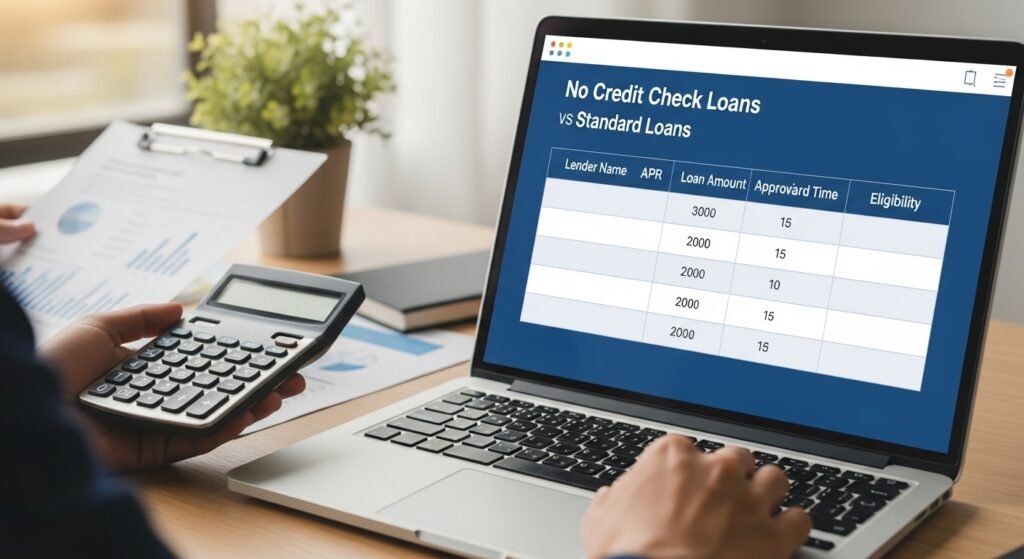
👍 Pros
- Faster approval
- Easier qualification
- No credit check
👎 Cons
- Very high interest rates
- Short repayment terms
- Higher risk of debt cycle
- Potential for scams
Tips to Stay Safe When Borrowing
If you must take a no credit check loan, follow these safety tips:
📌 1. Read the Fine Print
Look at repayment terms, fees, and total cost.
📌 2. Borrow Only What You Need
Avoid borrowing extra amounts that increase your repayment burden.
📌 3. Plan Repayment
Know exactly how and when you’ll repay before taking the loan.
📌 4. Avoid Rolling Over Loans
Repeated renewals increase costs dramatically.
📌 5. Check State Lending Laws
Some states cap interest rates and regulate payday lenders more strictly.
Conclusion
No credit check loans are not inherently illegal, but they are often risky.
While they provide quick access to funds without checking your credit score, they frequently come with:
⚠️ Extremely high interest rates
⚠️ Short repayment periods
⚠️ Risk of rolling debt cycles
⚠️ Potential for predatory terms
If you must use one, choose licensed lenders with transparent terms, borrow only what you need, and have a clear repayment plan.
However, the safer, more affordable options — like credit union loans, secured loans, or PALs — should always be considered first.
FAQ – No Credit Check Loans in the USA
❓ Do no credit check loans affect my credit score?
Not usually — approval doesn’t require a credit check — but failing to repay can lead to collections and eventually impact your credit.
❓ Are no credit check loans legal in the USA?
Yes — but only when offered by licensed lenders operating in compliance with state laws.
❓ What’s the main risk of no credit check loans?
The highest risks are very high interest rates and short repayment terms that can lead to debt traps.
❓ Are there safer alternatives?
Yes — credit union loans, secured loans, and traditional installment loans are usually safer and cheaper.